

C-PIMA Good Practices
The Climate–Public Investment Management Assessment (C-PIMA) helps countries assess how climate considerations are integrated into public investment management systems and identify areas for improvement.
Below are selected examples of good practices from member countries (see the relevant boxes for further details).
THE C-PIMA FRAMEWORK
(Click on the interactive chart to explore)
Loading...
C.1.a.
National and sectoral planning:
Are national and sectoral public investment strategies and plans consistent with Nationally Determined Contribution or other overarching climate change strategy on mitigation and adaptation?

C.1.b.
Land use and building regulations:
Do central government and/or sub-national government regulations on spatial and urban planning, and construction address climate-related risks and impacts on public investment?
Spatial Planning, Land Use, and Building Codes in Nepal
The Land Use Policy and the National Urban Development Strategy explicitly address climate risks to public infrastructure, while the National Building Codes include elements addressing climate-induced disaster risks. The Land Use Policy takes into account potential climate change impacts on land use plans, restricts infrastructure development in disaster-prone areas, seeks to ensure green spaces and control industrial zones, as well as promote forest conservation. The National Urban Development Strategy commits to the internalization of climate resilience and sustainability in urban land use and urban infrastructure. The National Building Codes (NBC) incorporate the impacts of natural hazards (e.g., earthquakes) and climate-induced disaster risks (e.g., floods and landslides). Specifically, the codes related to site selection, use of construction materials, and architectural design requirements consider the effects of climate change in some detail.
Both the Land Use Policy and the NBC apply nationwide. The NBC have been updated. Nevertheless, there is room for enhancement particularly in extending the scope of NBC to address climate change mitigation through improving energy efficiency in public buildings and strengthening compliance with the codes. Limited enforcement of the NBC in the issuance of building permits by municipalities calls for additional efforts.
Climate-Sensitive Land Use Planning Process in Kathmandu

C.1.c.
Centralized guidance on planning:
Is there centralized guidance/support for government agencies on the preparation and costing of climate-aware public investment strategies?
Centralized Guidelines in Uganda
The 2014 Guidelines on the integration of climate change in sector plans and budgets provide extensive strategic guidance to ministries and agencies on the development of climate strategies and public investment projects. The Guidelines outline the climate change management’s roles and responsibilities of various government entities. Additionally, it describes other climate change stakeholders’ role including developing partners and the private sector. The Guidelines give thorough guidance on how to include impact and vulnerability assessments throughout the development of the sectoral strategies: formulation process, financing, implementation, and evaluation at national, local, and community levels. The keys steps of integrating climate change in sector consist of: (i) assess and climate change impact of the sector, (ii) identify and analyze mitigation and adaptation options, (iii) identify and cost programs and actions for climate interventions, (iv) design and implement a plan for mainstreaming climate change in the different sectors, (v) monitor the implementation process, and (vi) evaluate performance and assess results.

Some sectors, including agriculture, have developed more detailed sector guidelines to provide practical, step-by-step guidance for all agricultural sector stakeholders including local governments, on how to mainstream climate change adaptation and mitigation in their planning and decision-making processes. The 2018 specific agricultural sector guidelines also provide a tool for climate smart adaptation screening of agriculture sector policies and plans.
C.2.a.
Coordination across central government:
Is decision making on public investment coordinated across central government from a climate-change perspective?
Public Investment Coordination Across Central Government in Tanzania
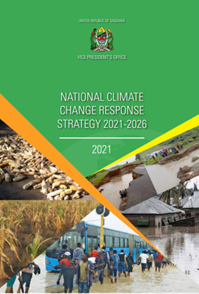
Public investment decisions are coordinated across all central government regardless of financing sources, including from a climate change perspective. Overall, the central government coordinates public investment planning and decision making through the National Climate Change Response Strategy, the Five-Year Development Plan (FYDP) and the PIM processes. These processes include climate-related capital projects that support national climate goals, although there is no specific definition of climate projects.
In parallel, the Vice President’s Office, Union and Environment, is responsible for overseeing the implementation of climate related activities and the NDC at the national level. A National Climate Change Steering Committee (NCCSC) has been established, chaired by the Permanent Secretary of the Vice President’s Office, to ensure coordinated actions across various sectors and institutions.
The 2004 Environmental Management Act also establishes Sector Environmental Sections in line ministries with the role of coordinating with the Vice President’s Office on environmental management. The FYDP III for 2021/22 – 2025/26 provides good evidence on how climate-related public investment is well coordinated across the central government in the planning phase.
C.2.b.
Coordination with subnational governments:
Is the planning and implementation of capital spending of sub-national governments coordinated with the central government from a climate-change perspective?
Coordination of Sub-National Governments in Indonesia
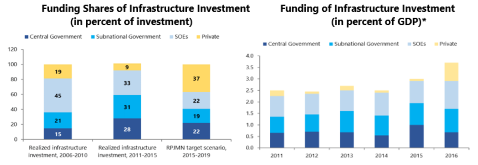
In Indonesia, information about major climate-related projects of sub-national governments (SNGs) is shared with the central government. There are formal discussions between central government and SNGs on the planning and implementation of climate-related investments, and information on SNG investments is published. SNGs are responsible for a major share of infrastructure investment as shown in the figure below, and the national planning agency Bappenas plays an active role in coordinating national and SNG investments.
Provincial governments are required to draw up local action plans for greenhouse gas (GHG) emission reduction (RAD-GRK), which are approved by the Governors. The RAD-GRK serves as a translation of the national climate planning documents (RAN-GRK and RAN-API) and is used to guide local governments in developing and implementing climate change mitigation and adaptation actions at the local level. The RAD-GRK informs the development of regional development plans, work plans and budgets.
C.2.c.
Oversight framework for public corporations:
Does the regulatory and oversight framework for public corporations ensure that their climate-related investments are consistent with national climate policies and guidelines?
Regulatory and Oversight Framework in Mauritius
The strategic planning and budget framework in Mauritius facilitates coordination and decision making on climate change related projects across the public sector. These planning documents apply to all central government, subnational government, and public corporations, including PPPs and externally financed projects. The Public Sector Investment Plan (PSIP) that accompanies the budget also has the same broad coverage but does not clearly identify climate change related projects.
The regulatory and oversight framework for public corporations promotes consistency between the climate-related investments and national climate policies and guidelines. The main public corporations in Mauritius include the Central Electricity Board, MARENA (Renewable Energy), Central Water Authority, Wastewater Management Authority, Airport of Mauritius, Mauritius Port Authority, Roads Authority and Mauritius Shipping Corporation. These corporations are owned by the Government of Mauritius with senior personnel from line ministries serving as board members, and they operate as state monopolies. They coordinate closely with the respective line ministries, and major infrastructure projects are included in both sectoral strategies and the PSIP. Public corporations’ investment projects contribute to achieving national climate change related goals, particularly in energy, water, and transport sectors. The tender announcement from MARENA in the figure below illustrates the close collaboration between public corporations and government agencies in pursuing climate-related initiatives.

C.3.a.
Climate analysis in project appraisal:
Does the appraisal of major infrastructure projects require climate-related analysis to be conducted according to a standard methodology with central support?
Incorporating Climate-Related Analysis into Project Appraisal in the United Kingdom
Infrastructure projects are required to incorporate climate analysis in progressively more developed business cases as they undergo gateway reviews. These business cases adhere to a standard methodology outlined in the Green Book and other guidance materials. Business cases prepared for investment projects outline the outputs and outcomes of a project, evaluating its design and return on investment. The “five case model” is applied, which entails defining: (i) the strategic case, (ii) the economic case, (iii) the commercial case, (iv) the financial case, and (v) the management case. These cases are developed through the Strategic Outline, Outline Business Case and Full Business Case, which are akin to the project concept, pre-feasibility and feasibility stages in other countries.
The UK’s appraisal methodologies, templates, tools and examples are typically publicly available. Support is also offered by the Treasury (HMT) to assist departments and agencies in implementing this framework. Certain departments offer guidance on how to apply appraisal methodology within their sectors, with the Department for Transport providing the most comprehensive guidance in this regard.
The Infrastructure and Projects Authority (IPA) performs business case assurance for major projects in the government portfolio, and In recent years has increased the effort placed on assurance of projects that are relevant to achieving net zero GHG emissions. Business cases are also reviewed by HMT and relevant departments to ensure quality. Additionally, HMT provides monthly training sessions to assessors of business cases.
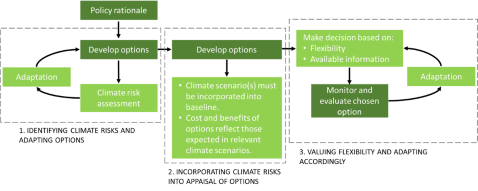
‘’Accounting for The Effects of Climate Change: Supplementary Green Book Guidance’’ outlines the methodology for integrating climate change considerations into project development and decision making processes. Originally published in 2009 and updated in 2020, this document provides guidance on how project development, appraisal, and decision-making should take into account climate change.
Building on the Green Book Approach to Account for Climate Change
C.3.b.
Public-Private Partnership framework including climate risks:
Does the framework for managing longer-term public investment contracts, such as PPPs, explicitly address climate-related challenges?
PPP Framework in Jamaica
Jamaica has utilized public-private partnership (PPP) arrangements extensively since 2011.
These PPPs are likely to gain importance as an avenue to tackle climate related investment needs, where resources and expertise of both the public and private sectors must come together to address the existential challenges facing the island. To this end in 2023 the authorities amended the Policy and Institutional Framework for the PPP Policy Program to integrate climate-related analysis in PPP project appraisal, selection, procurement, and contract management procedures. Additionally, the authorities revised the PPP Standard Operating Procedure Manual to reflect these requirements.
The Manual which operationalizes the Policy defines the processes and procedures to integrate climate considerations in the four critical PPP project phases: (i) project identification, (ii) business case, (iii) transaction, and (iv) contract management. The procedures outlined in the Manual for each PPP project phase are summarized below. Furthermore, the Manual includes useful templates for each PPP project phase. It is intended to be useful for the government entity in charge of PPPs—the Development Bank of Jamaica (DBJ)—as well as the enterprises, financial institutions and development organizations interested in exploring various aspects of PPP management.
The PPP Standard Operating Procedure Manual: Guidance by Project Phase Embedding Climate - Resilience at the PPP Project Identification Stage: the assessments and guidance in this section help the DBJ/Government of Jamaica (GoJ) PPP teams in ensuring that their projects align with GoJ development goals and objectives. Guidance is also provided to help project teams consider, at a high-level, how climate risks can impact the potential project. - Embedding Climate Resilience at the PPP Business Case Stage: this section provides guidance to help project teams integrate climate resilience considerations into the various technical, financial, economic, and environmental analyses conducted to determine if the project is viable and best delivered as a PPP. - Embedding Climate Resilience at the PPP Transaction Stage: the guidance in this section helps DBJ PPP teams/Enterprise teams in integrating climate resilience considerations into designing the contract, qualifying bidders, tendering the project, and evaluating bids received. - Embedding Climate Resilience at the PPP Contract Management Stage: the decision support tools in this section of the toolkit assist governments and project planners in tracking any climate related agreements established during the Transaction Stage. They also help in managing any unforeseen climate-related risks that may arise over the life of the PPP. |
C.3.c.
Climate consideration in project selection:
Are climate-related elements included among the criteria used by the government for the selection of infrastructure projects?
Project Selection in Rwanda
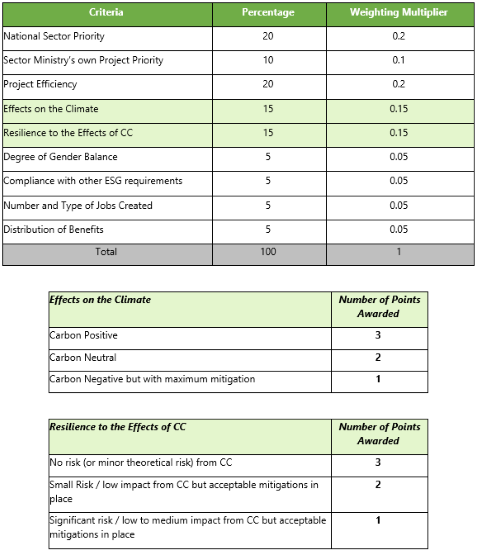
In 2023 Rwanda updated its multi-criteria project selection analysis to be more climate change sensitive. The table below provides the full list of project selection criteria and their respective weights.
Selection Criteria with Climate Consideration
C.4.a.
Climate budget tagging:
Are planned climate-related public investment expenditures, sources of financing, outputs and outcomes identified in the budget and related documents, monitored, and reported?
Budget Reporting in Bangladesh
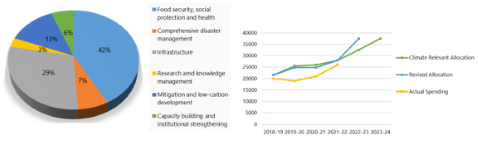
Budget Report 2023-24 represents Bangladesh's 6th Annual Climate Budget Report. This report encompasses an analysis of climate-relevant allocations across 25 ministries/divisions of the government for the fiscal years FY2019-20 to FY2023-24, as well as an expenditure analysis for the period from FY2019-20 to 2021-22. The report is structured into four sections. The first section provides a brief overview of Bangladesh's climate change policy, planning, and implementation framework, alongside presenting global and national perspectives on climate change. The second section delves into the budget allocations for 25 climate-relevant ministries/divisions, including an assessment of the nature of expenditures and tracking of key thematic data. The third section provides a brief account of the Bangladesh Climate Change Trust Fund, Green Climate Fund (GCF), National Adaptation Policy (NAP), Nationally Determined Contribution (NDC), Delta Plan, and the allocation of finance for climate-relevant planning and funds. Lastly, the fourth and final section concludes with some observations and recommendations based on analysis presented earlier.
In FY2023-24, the total climate-relevant budget allocation across the 25 ministries/divisions accounts for 54.09 percent of their total budgets, with 8.99 percent specifically for climate-relevant expenditures. The climate-relevant allocation for operational budget increased from 6.88 percent in FY2019-20 to 7.04 percent in FY2023-24. The development budget allocation for climate change increased from 9.83 percent to 10.84 percent during the same period.
Climate-relevant Allocation (%) across BCCSAP Thematic Areas in FY2023-24
C.4.b.
Ex post review of projects:
Are ex-post reviews or audits conducted of the climate change mitigation and adaptation outcomes of public investments?
Audit in Tamil Nadu, India
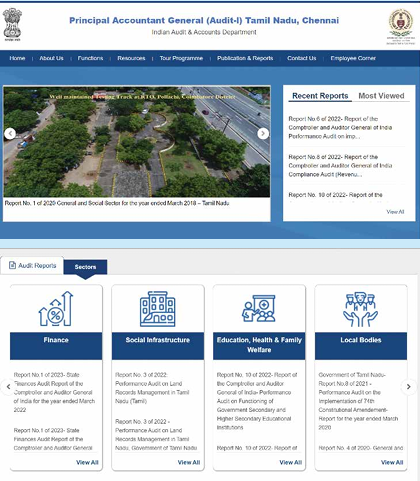
The audit wing of the Comptroller and Auditor General (CAG) has taken steps to integrate climate change in their audit program, building upon capacities developed at national level.
The International Centre for Environment Audit and Sustainable Development (ICED) was operationalized in 2013 under the aegis of the Indian CAG for capacity building and knowledge sharing in environment audit and sustainable development. ICED is a designated Global Training Facility of the Working Group on Environmental Audit of the International Organization of Supreme Audit Institutions. Its research and training activities have extensively covered topics related to climate change (audit of urban transport and bus rapid transit; urban flood management in India).
Benefiting from these trainings and research activities, the Tamil Nadu branch of the CAG has already published a report on flood management and response in Chennai and its suburban areas (2017), as well as contributed to a report on conservation of coastal ecosystems covering several Indian states (2022).
All reports are published and available at: for scrutiny by the Public Accounts Committee, Audit Reports | Principal Accountant General (Audit-l) Tamil Nadu, Chennai (cag.gov.in)
C.4.c.
Asset management:
Do the government’s asset management policies and practices, including the maintenance of assets, address climate-related risks?
C.5.a.
Disaster risk management strategy:
Does the government publish a national disaster risk management strategy that incorporates the potential impact of climate change on public infrastructure assets and networks?
C.5.b.
Ex ante financing mechanisms:
Has the government put in place ex ante financing mechanisms to manage the exposure of the stock of public infrastructure to climate-related risks?
Ex-Ante Financing Mechanisms in Mozambique
Mozambique has a range of financing instruments to drawn on to manage the exposure of infrastructure assets to climate-related risks, including budget instruments and parametric risk insurance. In 2022 the government adopted a Plan for Financial Protection against Disasters (2022-2027) which outlines financing mechanisms for disaster management.
· Ordinary budget. The Road Fund of the Ministry of Public Works, Housing, and Water Resources has a specific annual sub-program budget line for national-level emergency maintenance of roads and bridges. Between 2014 and 2024, the budget allocation to the emergency recovery of roads and bridges averaged MT 2.4 billion per year.
· Sovereign parametric insurance. In 2022 the government through the National Institute of Disaster Management secured a parametric risk transfer insurance against tropical cyclones, covering the cyclone and rainy season of 2022/2023. The annual insurance premia of US$ 4 million/year was financed by the WB. The US$ 35 million coverage (per hazard) was designed to provide Mozambique with a payout when certain triggers are met.1 This insurance facilitated the government's response to Cyclone Freddy in February 2023. With financial support from the WB, the insurance against tropical cyclones was renewed for the cyclone and rainy season of 2023/2024 and will continue in 2024/2025. In addition, with support from the African Development Bank (AfDB), which also financed the premia of US$ 2 million/year, authorities secured a parametric risk transfer insurance against drought, covering the 2023/2024 drought season.
C.5.c.
Fiscal risk analysis including climate risks:
Does the government conduct and publish a fiscal risk analysis that incorporates climate-related risks to public infrastructure assets?
Fiscal Risk Analysis in Costa Rica
Costa Rica is implementing a plan to decarbonize its transportation sector. This long-term plan will have a series of significant benefits for the Costa Rican economy, especially in making economic growth sustainable and environmentally friendly. However, these actions could generate fiscal risks.
In the case of Costa Rica, the fiscal risks are quantified by considering (i) the potential cost for the central government of implementing electric public transportation means, (ii) the change in fuel tax revenues due to increased importation of electric or environmentally friendly vehicles, and (iii) the change in revenue from other taxes due to increased importation of electric or environmentally friendly vehicles. Regarding the implementation of electric public passenger transportation means, the cost would be associated with the subsidies required to be transferred to the service operator to maintain a minimum expected profitability. As for the fuel tax, the effect would come from the decrease in fossil fuel demand production, which would have a direct impact on revenue.
The 2023-2028 Medium-Term Fiscal Framework (MTFF) estimates the fiscal cost of the three analysed elements at 2.4 percent of GDP in present value terms. Additionally, the MTFF presents some scenario analysis.
